
October 28, 2026
/
Tria Products
Choosing the Right Exterior Wall System
When designing a commercial or industrial steel building, selecting an appropriate exterior wall system is an important decision. Two options are precast concrete panels and conventional metal cladding. Both can be incorporated into steel building projects, but they serve different purposes and introduce different structural and cost considerations. At TRIA Products Ltd., experience with both steel manufacturing and precast concrete provides an opportunity to evaluate how these systems can work together.
Understanding Metal Cladding
Metal cladding is a common exterior wall solution for pre-engineered steel buildings. It provides an exterior covering supported by the building’s structural framing and secondary members. For many commercial and industrial applications, metal cladding is an economical choice compared with using precast concrete panels solely as an exterior finish. However, the intended use of the building and the potential for damage to exterior walls should be considered before selecting a system.
When Does Precast Concrete Make Sense?
Precast concrete becomes particularly relevant when a building requires more than a conventional exterior finish. In certain applications, the wall system must accommodate operational demands, additional loading, or increased exposure to damage.
High-Traffic Loading Docks
Industrial facilities with numerous loading dock doors are one example. Semi-trailers regularly backing into loading areas introduce the potential for impacts against exterior walls. Precast concrete can provide a more substantial backing structure for dock seals and associated loading dock components. This makes it worth evaluating in facilities where frequent truck movements are part of daily operations.
Fertilizer Storage Facilities
Fertilizer storage presents a different set of challenges. Stored materials may exert additional loads against exterior walls, while the materials themselves can create corrosive conditions. These requirements influence the selection of structural systems, wall materials, and protective details. Precast concrete and steel can be considered together when evaluating a building intended for these conditions. The final design must account for the particular fertilizer products, exposure conditions, and structural requirements.
Understanding Hybrid Steel and Precast Buildings
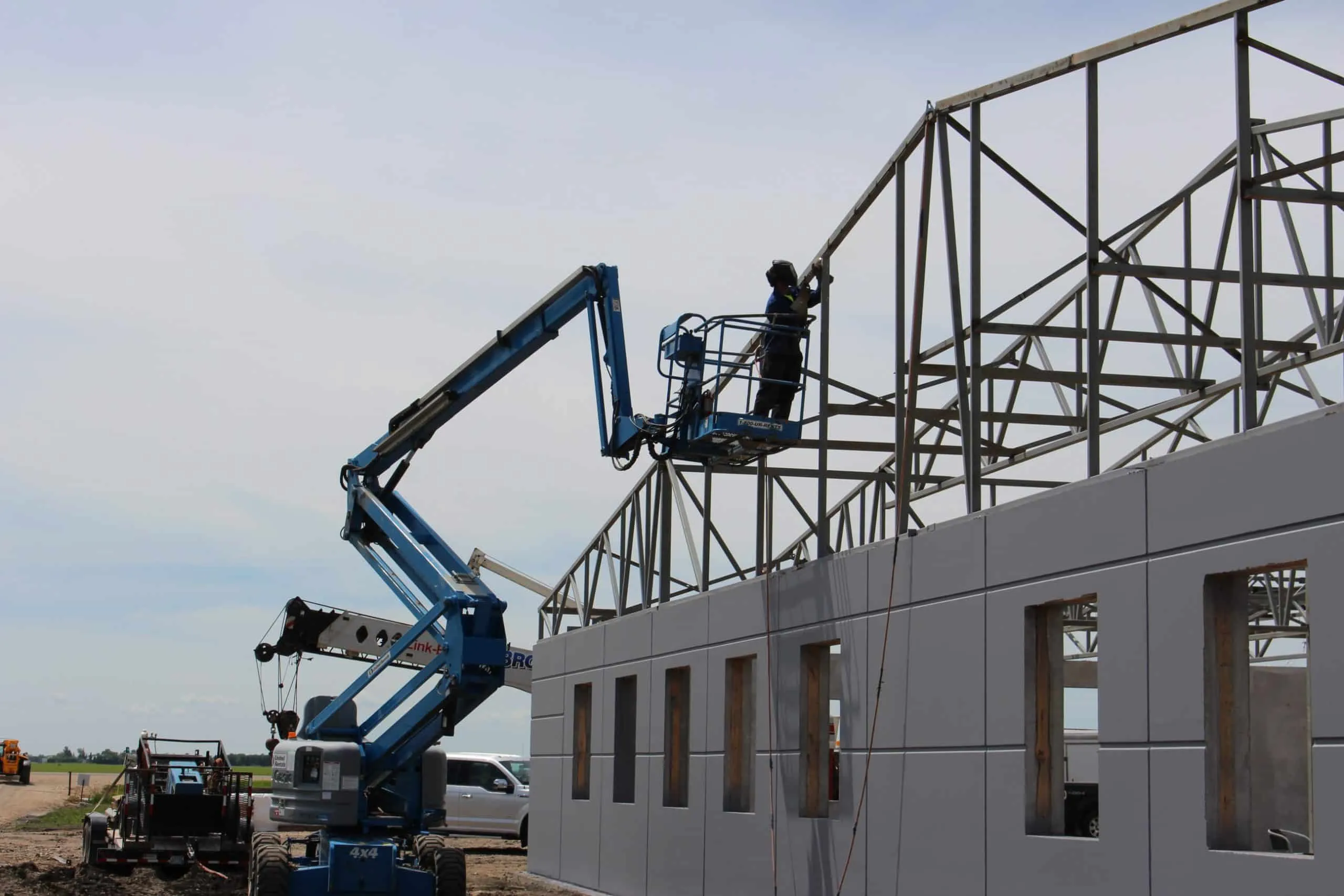
A hybrid building combines elements of steel construction with precast concrete. However, there is an important distinction between using precast panels as cladding and using precast walls as part of the structural system. When a steel structure remains responsible for supporting the building and precast panels are added primarily as an exterior finish, the overall cost can be substantially higher than a comparable metal-clad building. The economics change when the precast system performs structural functions that would otherwise require additional steel framing. This is why comparing precast concrete and metal cladding strictly on a square-foot material cost basis can be misleading.
Which Wall System Is Right for Your Project?
The decision should consider the building’s intended use, operational exposure, structural requirements, and budget. Metal cladding may be appropriate for a conventional warehouse or workshop, while precast concrete may offer advantages where wall impact resistance or specialized loading conditions are significant. Rather than selecting a wall system solely on appearance or initial material cost, building owners should evaluate how the system contributes to the complete building design.
Discuss Your Building Requirements With TRIA
TRIA Products manufactures steel and precast concrete building components for commercial and industrial applications. Our team can discuss the requirements of your project and help identify appropriate options for further engineering evaluation. Contact TRIA Products to discuss your steel building or precast concrete project.
Our Blog
News & Events
All Articles
October 28, 2026
Precast Concrete vs. Metal Cladding for Steel Buildings
Choosing the Right Exterior Wall System When designing a commercial or industrial steel building, selecting an appropriate exterior wall system is an important decision....

Blog

October 23, 2026
Design-Build vs. Traditional Construction: Which Approach Is Right for Your Steel Building?
Understanding Your Steel Building Project Delivery Options Planning a steel building involves more than selecting materials and dimensions. Customers must also determine how their...
Steel Buildings

October 23, 2026
Steel Buildings for Northern Manitoba and Remote Communities
Steel Building Solutions Beyond Major Urban Centres Steel building projects are not limited to Winnipeg and Southern Manitoba. Northern communities, industrial operations, and remote...
Steel Buildings
